Beyond Football: Sports Expanding Uganda’s Competitive Calendar

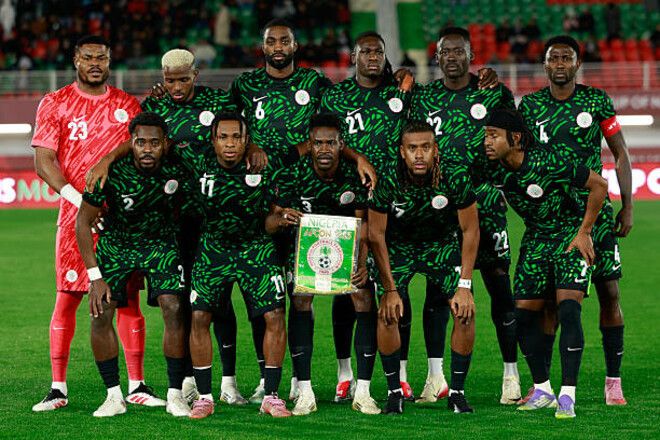
Уганда – Танзания. Нигерия – Тунис. Смотреть онлайн. LIVE трансляция.  Читайте на UKR.NET

A wider sporting landscape

Football is the most visible sport in Uganda, but it does not stand alone. Athletics gives the country a global presence, rugby creates a strong club and school culture, netball provides an important team-sport platform for women, and basketball and cricket add different styles of competition. Together, these sports make the calendar more varied and create more routes for young athletes to find a discipline that suits them.

Before comparing best betting sites, it is worth noticing how much sport exists outside a football fixture list. A weekend can include a running event, a rugby tournament, a netball match and a basketball game, each with its own technical language and local community. Following more than one sport is a simple way to understand the full range of athletic ability in Uganda.

Football may be the most visible weekly reference point, but Uganda’s sporting landscape is wider. Athletics, netball, rugby, basketball, cricket and other disciplines each offer different skills, rhythms and routes for participation. The people involved are athletes, club officials, school organisers, coaches, referees, broadcasters, volunteers and supporters of different disciplines. In that setting, details such as whether each sport has regular competition, visible role models, trained officials, workable facilities, youth opportunities and a route from participation to performance are not background noise; they shape the experience and reveal what needs attention. Looking at this layer adds useful context. It explains why two events with the same final score or placing can feel completely different, and why a well-run but quiet occasion can matter just as much as a dramatic one. Sport becomes more informative when those details are noticed. This early work is easy to miss, yet it often determines whether the event feels calm, accessible and worth repeating for a first-time visitor as well as for a committed participant.

What each sport adds

Basketball rewards movement, spacing and quick decisions, making it especially engaging for school and university competition. Cricket asks for patience, technique and tactical awareness over a different rhythm from football. Netball combines speed with precise passing, while rugby demands collective commitment in both attack and defence. These contrasts give athletes several ways to develop confidence and teamwork.

Smaller sports often need more consistent coverage and facilities, not just a single moment of attention. When reliable fixture information, coaching courses and local leagues are available, a sport becomes easier to join and easier to follow. Visibility grows through repetition: people need to see that a competition is active, organised and worth returning to.

Variety matters because talent is not one shape. A young person may discover endurance in running, spatial awareness in netball, contact skills in rugby or coordination and decision-making in basketball long before they know where that ability can lead. Behind that visible activity sits a system: fair scheduling, venue access, sport-specific coaching, communication between schools and clubs, inclusive event design and meaningful media coverage. These elements may seem administrative, but they decide whether preparation is calm or rushed and whether a sporting space feels open to the people it is meant to serve. It is worth treating these practical arrangements as part of sporting standards. They make participation safer, lower the chance of avoidable disruption and allow the best qualities of the competition to become visible. The practical test is whether people can understand what is expected of them, prepare in good time and focus on the sporting task rather than on avoidable uncertainty.

Why variety strengthens sport

A diverse sporting culture means young people have more than one model of success. Not everyone is built for the same game or motivated by the same challenge. A runner may thrive in individual competition, while another athlete may find confidence in a team environment. Giving both routes proper support makes the whole system healthier.

Variety also keeps matchday entertainment in perspective. There is always another competition, another discipline and another opportunity to learn, so no one result needs to carry too much emotional or financial weight. That is a healthier foundation for enjoying sport and for respecting athletes who compete in every corner of Uganda’s calendar.

Every sport also brings its own event culture. A school tournament, a club rugby day, a road race and a basketball league fixture create different social spaces, but all depend on organisers who make participation feel reliable. A closer observer can use whether each sport has regular competition, visible role models, trained officials, workable facilities, youth opportunities and a route from participation to performance as a guide, then compare what was planned with what unfolded. The same final result can have several causes, so it helps to watch where pressure appeared, who adapted and which small decision changed the balance. The aim is not to turn every viewer into a specialist. It is simply to replace vague reaction with a more curious, grounded understanding of what actually happened. Keeping a short record of these details from one event to the next is often enough to reveal a pattern that a single score, clip or headline would hide.

Every sport needs a route to visibility

Developing sports benefit when fixtures are communicated clearly and results are recorded consistently. Those basic steps make it easier for schools, clubs, local media and potential participants to stay connected. A good competition does not need to be huge to matter; it needs to be dependable enough that people know when and where to find it.

The more complete Uganda’s sports calendar becomes, the more people can find a place within it. That is good for health, confidence and community life, and it gives elite programmes a wider base from which to identify talent.

Competition is not only for elite athletes. Recreational leagues, campus teams, school events and community races give people a reason to stay active and can create the first bridge toward coaching, officiating or administration. This is where young people able to try several sports before finding the one that best fits their skill, interest and circumstances becomes important. Development works best when expectations are clear and the next opportunity is earned through learning, not through pressure to look finished too early. This long view benefits the whole community. It creates better players and athletes, but it also develops future coaches, officials, organisers and informed supporters who understand the work required behind performance. That is particularly important for young participants, who need feedback that explains what to practise next instead of a verdict that labels them too early.

A place for every kind of talent

Uganda does not need every athlete to follow the same path. A wider sporting calendar gives people the freedom to find a discipline that fits their strengths, whether that means individual endurance, team strategy, speed, skill or physical contact. That choice is a sign of a healthy sporting culture.

Media attention should reflect that range. Explaining how a sport works, reporting its calendar and introducing its athletes are practical ways to help a new audience feel welcome before a major result arrives. The lasting standard is straightforward: a wider calendar is valuable when every discipline has enough continuity to build a real community rather than appearing only for a single event. That principle helps supporters, organisers and athletes decide which parts of the experience deserve investment and which habits should be changed. The point is not to make sport less emotional. It is to give that emotion a constructive place, so the energy around an event supports people rather than exhausting them. It gives everyone involved a useful decision rule: choose the action that protects participation, learning and respect after the noise of a single result has faded.

Participation is the starting point

Every local court, field and running route where people can take part gives Uganda’s sporting future a stronger base. Elite success becomes more sustainable when it grows from broad, welcoming participation.

The long-term gain is resilience. A sports culture with several active disciplines can serve more communities, develop more kinds of expertise and avoid placing the whole public conversation on one game alone. In practical terms, athletes, club officials, school organisers, coaches, referees, broadcasters, volunteers and supporters of different disciplines can use the information available to make better choices and set more realistic expectations. The detail is worth protecting because it connects one event to the next and gives a season or programme a sense of direction rather than a series of isolated moments. In this way, attention to the detail supports the wider structure and gives the next group of participants a clearer, more welcoming starting point.

A longer view of the subject

For that reason, the subject deserves more than occasional attention. It offers a way to see how individual effort, local organisation and public support meet in the same sporting space. When those elements are allowed to reinforce one another, the result is not just a better event but a stronger route for the people who will play, coach, organise and follow it next. For the expansion of Uganda’s competitive sports calendar beyond football, that is the practical meaning of sustained support.

Active Design: When Sport Inspires Creativity

Design and movement share an unexpected harmony. Observing athletes in motion, designers often draw inspiration from rhythm, energy, and physicality. Whether it’s the arch of a jump, the torque of a swing, or the flow of a team passing a ball, the human body in action sparks ideas that can transform materials into expressive creations. For those following the broader world of sports, resources like sports predictions provide real-time insights that complement the experience, merging observation with anticipation. Continue reading “Active Design: When Sport Inspires Creativity”

Material Encounters

Design is never born in a vacuum. It emerges from specific places, contexts and relationships — with materials, with people, with histories both visible and hidden. Across different geographies and cultures, designers are returning to the roots of making: working with what is locally found, reviving traditional skills, and giving voice to the material world. These approaches not only foster sustainable and meaningful practices, but also reveal powerful stories embedded in the act of creation. Continue reading “Material Encounters”

Animism – The Tales of Matter

Natural materials are imbued with lives of their own, with their own life stories. They tell tales of the earth, the wind, the water, and the sun. Of swarming and gathering, of predator and prey, resilience and respite, mimicry and motion, becoming and vanishing. They connect nature and culture, science and art, thinking and doing, the past with present and future, and the human maker with a sense of the non-human being the material once was. Continue reading “Animism – The Tales of Matter”

Austurland: Designs from Nowhere

Exploring the possibilities for small-scale design and production in East Iceland, a series of workshops saw four designers collaborating with local practitioners. The designers have now created stunning, contemporary products – using locally sourced materials and skills – which are on show now at Spark Design Space in Reykjavik, forming the exhibition Austurland: Designs from Nowhere. Continue reading “Austurland: Designs from Nowhere”